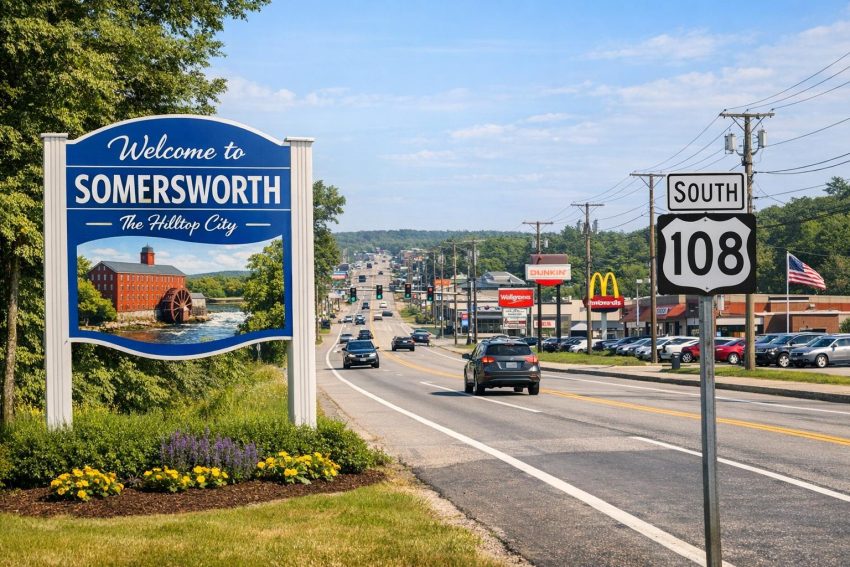
Route 108 runs right through Somersworth, New Hampshire, acting like a steady conveyor belt for cars, trucks, and everyday errands. If you’ve ever watched traffic flow late morning or during evening commutes, you’ll notice the mix: local residents heading to work, commercial vehicles making deliveries, and travelers passing through between Dover to the south and Rochester to the north. That consistent movement turns the corridor into more than “just a road.” For businesses, it becomes a visibility machine, and for property owners, it’s a baseline demand driver that can support everything from everyday retail to repurposed industrial buildings.
This article expands on the business and real estate angle of Route 108 in Somersworth, focusing on what tends to work there, where opportunities may show up, and what risks to watch before you buy, lease, or build. The goal is practical: help you understand the corridor’s fundamentals and how they translate into trading and brokerage decisions.
Why Route 108 Matters for Brokerage and Trading Decisions
When people think about retail corridors, they often jump straight to rent prices and foot traffic. Route 108 is a bit more old-school than that. It’s a drive-by corridor, meaning many sales happen because the right product or service is easy to find at the right moment. That’s valuable for brokerage because it supports demand across multiple categories—even when consumer behavior is shifting online.
Route 108 also sits in a practical position within the regional transportation network. It connects Somersworth with major neighboring markets and keeps travel times relatively predictable. Predictability matters for leasing because tenants prefer markets where customer flow doesn’t feel like a coin flip.
Traffic Mix: Local, Commuter, and Through-Vehicle Demand
In a place like Somersworth, you typically won’t get “tourist foot traffic,” and that’s fine. You get a different type of trade: commuters stopping for gas, residents running errands, and drivers passing between larger population centers. For certain business types—food service, convenience retail, automotive-related services—that traffic mix can be more valuable than pure walk-in volume.
From a trading perspective, that means leases often benefit from steady baseline activity rather than hype-driven surges. You’re not necessarily underwriting a brand-new concept with viral demand. You’re evaluating whether the tenant’s business model still matches what the corridor naturally delivers.
Somersworth Economic Context: The Tri-City Connection
Somersworth is in Strafford County and is commonly grouped with Dover and Rochester as part of the “Tri-City” area. Dover may be the bigger magnet for employers and retail, but Somersworth still benefits from proximity. People live in Somersworth and work (or shop) across the region, including in and around Dover and Rochester.
That pattern matters when you’re thinking like a broker. A corridor can look smaller than it “should” on paper, but if nearby employment centers drive consistent local spending, tenant performance can stay stable.
Local Industries You’ll See Reflected Along the Corridor
Somersworth’s economy includes lightweight manufacturing, healthcare, retail, education, and service businesses. Along Route 108, that shows up in two ways. First, you’ll see demand for practical services—medical, personal care, repairs, and everyday shopping. Second, local employment supports recurring consumer spending, which tends to help tenants weather small economic dips.
Route 108 functions as both a local retail corridor and a connector for intercity traffic. Tenants that can serve both audiences tend to do better than those that rely only on one group.
Accessibility and Strategic Location
Route 108 provides direct access into downtown Somersworth and creates connections toward Dover and Rochester. It also connects relatively efficiently to the Spaulding Turnpike, a limited-access route that links the Seacoast area with Interstate 95 and inland destinations. For brokerage work, that matters because logistics and customer access often influence tenant decisions as much as rent.
Properties along Route 108 commonly offer multiple driveways and signalized intersections. While this may sound minor, it affects customer behavior. People don’t love complicated entrances—especially when they’re in a hurry with kids, a load, or a schedule that’s already running late.
Public Transportation and Regional Coupling
Somersworth is not a major urban hub, so you shouldn’t treat the corridor like it’s built around transit ridership. Still, regional public services connect Somersworth with Dover and surrounding towns. In practice, that supports a baseline level of workforce travel and helps certain services—clinics, professional offices, and personal services—maintain demand.
Retail Opportunities: Where Demand Still Shows Up
Retail trade is usually the most visible category along a corridor like Route 108. The corridor supports convenience stores, pharmacies, grocery outlets, and specialty shopping. In many markets, the presence of national chains suggests stability, since chains often only expand into areas where demand and lease economics make sense.
But stability doesn’t mean there’s no opportunity. It often means opportunity shows up in narrower niches.
What Retail Spaces Tend to Work Along Route 108
Retail spaces do best when the offering matches the “stop-and-go” behavior that corridors naturally create. That typically means:
- Products people need quickly (pharmacy-related items, basic household supplies)
- Items people plan for but still want near their routes (certain grocery categories, seasonal goods)
- Convenience-driven services where parking and visibility help (takeout counters, quick specialty purchases)
For brokers and investors, that translates into underwriting questions about tenant fit: does the store rely on destination shoppers, or can it earn sales from passing demand and quick visits?
Cross-Border Consumer Effects
Route 108’s proximity to Maine can influence consumer patterns. Cross-border shoppers may show up when product availability differs or when tax-related differences play a role. That doesn’t guarantee constant “border rush,” but it can be meaningful for certain retail categories. If you’re trading commercial property, it’s worth checking which product types sell through fastest in the broader region and whether seasonal demand increases at specific times.
Food Service and Hospitality: The Corridor’s Default Tenant Category
Food service businesses tend to cluster along Route 108 for a simple reason: people eat when they’re already traveling or when they’re commuting. The corridor supports fast-food chains, casual dining, cafés, and takeout-focused concepts.
From a leasing standpoint, food service is often attractive because demand can remain relatively resilient compared to some other retail categories. You’d still underwrite carefully—tenant quality and site layout matter a lot—but the business type itself often aligns with traffic corridors.
Expansion Ideas That Match Local Demographics
Somersworth and the broader Seacoast region include working professionals, families, and commuters. That blend supports food concepts that range from quick-service breakfast to family-friendly dinners. Businesses that emphasize dietary variety can also perform well, especially when residents want more than “the same three options.”
Another practical point: takeout and pickup services strengthen revenue in real weather. New England winters aren’t exactly known for outdoor shopping stamina, and food businesses know it.
Hospitality-Adjacent Services
Somersworth isn’t a primary tourist magnet, but it can serve as a practical lodging alternative for visitors who want to stay within reach of Dover, Portsmouth, and southern Maine. That creates opportunities that aren’t limited to hotels.
Hospitality-adjacent business types—property management for short-term rentals, extended-stay operations, and small lodging models—can benefit when they’re placed where travelers naturally pass through. Route 108 offers visibility and access, which helps these operations market without relying entirely on online ads.
Healthcare and Personal Services: Stable Demand With Real Requirements
Healthcare services are generally steady in markets like Somersworth because outpatient care continues regardless of economic weather. Clinics, dental offices, physical therapy providers, and specialized medical practices prefer high visibility and easy access. Route 108 provides both.
An aging population across New Hampshire increases demand for outpatient services, home care, and wellness-focused enterprises. That can support not only traditional healthcare offices but also complementary service providers.
Site and Compliance Details Brokers Can’t Ignore
Healthcare tenants aren’t casual about building standards. Parking capacity, accessibility compliance, and internal layout influence whether a space works. If you’re evaluating a property for conversion, confirm practical details early—door widths, bathroom accessibility, parking counts, and utility capacity.
For trading decisions, healthcare leasing can also mean longer-term tenant stability, but it can come with higher buildout costs. The broker’s job is to balance the stability with the upgrade requirements.
Personal Services: Recurring Revenue by Appointment
Salons, fitness studios, and therapy-related practices also fit well along Route 108. These businesses often depend on appointments and client retention, which tends to stabilize revenue when the business builds a local customer base. Visibility helps, but so does whether the space is comfortable and functional for clients.
Light Industrial and Flex Space: Underused Assets With a Plan
Not every building along Route 108 is shaped like a “retail storefront.” Some parcels include flex space and light industrial layouts—warehousing, small manufacturing, contractor storage, and office/showroom combinations. Investors often miss these opportunities because they’re not as easy to market as storefronts. That said, flex space can be a good match for local businesses and smaller logistics operations.
Why Flex Space Can Perform Better Than People Expect
Flex space often appeals to tenants that need operational functionality rather than aesthetics. Small manufacturers, contractors, and e-commerce distributors can use buildings that provide loading access, storage space, and workable office portions.
Somersworth’s manufacturing footprint historically supports zoning and use categories that make light industrial leasing feasible. When older structures get modernized—roof replacements, insulation upgrades, energy-efficient HVAC—leasing can become easier and tenant outcomes more predictable.
Last-Mile Distribution: Smaller Doesn’t Mean Useless
The growth of online commerce increased demand for last-mile distribution. Big distribution centers cluster near major interstates, but not everyone needs that scale. Smaller operations often benefit from corridor access, proximity to customers, and reasonable operating costs.
Route 108’s role as a connector supports these mid-sized logistics needs, especially when suppliers and workforce travel patterns align with the corridor.
Commercial Property Redevelopment: Adaptive Reuse and Practical Upgrades
Commercial real estate along Route 108 includes standalone buildings, strip plazas, and multi-tenant centers. Some assets are mature—decades old—and show the usual signs: outdated storefronts, inefficient layouts, or lingering deferred maintenance. For brokers and investors, that can create redevelopment opportunities.
Redevelopment doesn’t always mean rebuilding from scratch. A lot of value comes from targeted modernization: better unit configuration, updated storefronts, improved parking layout, refreshed signage, and basic system upgrades.
Zoning, Signage, and What City Approval Actually Looks Like
The City of Somersworth sets zoning districts that determine allowed uses, signage rules, setbacks, and parking requirements. Projects can also require site plan review, and sometimes special approvals. For investors, that means timing needs to be part of the underwriting model, not an afterthought.
Engaging with planning authorities early helps avoid surprises. You may not love the paperwork, but it’s cheaper than redesigning after the fact.
Mixed-Use Infill: Not Automatic, But Worth Modeling
Mixed-use development can become viable when zoning permits and when market demand supports it. Route 108 is primarily vehicle-oriented, so mixed-use would likely show up as selective infill: possible residential units above ground-floor commercial, depending on zoning adjustments and building economics.
So if you’re trading redevelopment opportunities, treat mixed-use as a scenario to model rather than a default path. It’s a “could,” not a “will.”
Professional and Office Services: Visibility Over Foot Traffic
Professional services—law firms, accounting offices, insurance agencies, consulting—benefit from accessible locations and clear public visibility. They don’t always rely on walk-in volume. Still, people like to find the office quickly without turning their GPS into a stress test.
Along Route 108, that kind of practical visibility supports office demand.
Hybrid Work and the Shift Toward Smaller Office Footprints
Hybrid work has changed how office space is used nationwide. In secondary markets like Somersworth, big corporate footprints aren’t always the best fit. Smaller office suites and shared workspaces can be more realistic for both tenants and property owners.
If you’re considering acquisition of an underutilized office building, confirm whether the layout supports subdividing suites without excessive structural disruption. Tenants also care about broadband quality, parking, and whether the space feels professional without major cosmetic overhaul.
Automotive-Related Enterprises: The Corridor’s Natural Specialty
Route 108 is car-forward, which makes automotive businesses a logical category to watch. Gas stations, repair shops, and vehicle sales lots often benefit from the corridor’s visibility and regular pass-through traffic.
Automotive-related demand is tied to two things: vehicle ownership in the region and the simple reality that things break, get dented, or need maintenance on schedule. That baseline remains even when discretionary spending tightens.
Electric Vehicle Charging: Early Advantage for the Right Site
Electric vehicle adoption across New England is increasing. Charging infrastructure placed along busy routes can attract both local drivers and travelers. The best opportunities tend to pair charging with convenience—nearby food, quick retail, or services that make a short stop feel worthwhile.
For brokers, EV charging can also affect property value depending on lease structures, site access, and utility capacity. Confirm electrical service and any required coordination with utility providers before you assume the economics work.
Collision Repair, Detailing, and Niche Custom Work
Collision repair and detailing services often perform well in commercial corridors where customers can reach the site easily and when the business has the lot space required for vehicles. Specialty customization can also succeed, though it tends to require clearer zoning compatibility and client parking.
When you’re trading property for automotive use, check whether the parcel supports operations like towing access, signage, and vehicle storage without running into compliance issues.
Small Business Environment: How Policy and Taxes Influence Demand
New Hampshire generally has no statewide sales tax, which can affect consumer spending patterns. For certain retailers, that matters more than people admit. Shopping behavior changes when the “at the register” price feels consistent compared to states with sales tax.
That can benefit businesses along Route 108—especially those that serve both local residents and cross-border customers.
Local Support Systems and Referrals
Entrepreneurs along Route 108 can draw from regional business resources: chamber of commerce groups, economic development offices, and small business support centers. The Tri-City connection matters here too. Referral networks spread across Dover, Rochester, and Somersworth, which can improve early tenant performance and reduce the doom-and-gloom cycle that startup businesses sometimes hit.
Incentive Programs: Worth Checking, Not Worth Guessing
Some municipalities offer incentives for redevelopment and exterior improvements. Tax increment financing districts or façade improvement programs can appear in certain conditions.
If you’re evaluating a redevelopment purchase, request current program details and confirm eligibility. Don’t assume the presence of incentives because they existed years ago. Cities change their rules more often than people change socks, and usually without warning.
Demographic Considerations: Income, Age, and Housing Spillover
Demographics drive buying behavior. Somersworth includes long-term residents, younger families, and commuters working in nearby cities. Household income levels and age distribution influence what people buy and how often they buy it.
Housing trends across the Seacoast region also matter. When higher-cost markets become less affordable, neighboring communities can absorb spillover. That tends to increase demand over time for services, retail, and healthcare.
How to Translate Demographics Into Lease Strategy
Demographics don’t automatically tell you what to lease. They tell you what categories tend to fit:
- Family growth often supports education-adjacent services and family dining
- An aging population increases demand for healthcare and accessible personal services
- Commuter patterns support convenience retail, breakfast options, and automotive needs
When brokerage firms underwrite, they often use these categories to estimate absorption and rent resilience. It’s not perfect science, but it beats guessing.
Regulatory and Zoning Factors That Affect Tenants and Tenancy Costs
Commercial properties along Route 108 sit within zoning districts defined by the City of Somersworth. Regulations can affect permitted uses, signage dimensions, setbacks, and parking requirements. That means a “good-looking” space from the outside may not work for the exact tenant type you want.
A practical brokerage step is to confirm whether the intended use is permitted by right, requires a variance, or needs conditional approval. Delays can change deal economics.
Permits, Site Plan Reviews, and Timing
Many projects require site plan approval. Those reviews coordinate building placement, stormwater management, traffic impacts, and utility capacity. That can add time but also helps ensure the project survives real-world constraints.
If you’re trading properties, timeline risk should be estimated early. Even a small change—moving a parking area, adding signage, reconfiguring a driveway—can expand approval time.
Environmental Review: Stormwater and Site Conditions
Environmental regulations may apply to certain parcels, including stormwater management and protection around wetlands. In some markets, those checks can become a major cost driver if an older building sits on challenging land.
So due diligence matters. Ask for existing environmental reports when available, and budget for new assessments when records are incomplete.
Challenges and Risks on Route 108
Route 108 has advantages, but it isn’t automatically a safe bet. Investors and brokers should treat it like a steady corridor, not an all-weather guarantee.
Market Saturation in Certain Categories
Competition can limit market entry in categories that already have multiple similar tenants. If the area already has several convenience stores or overlapping quick-service concepts, a new tenant may struggle unless it offers a differentiated offering or superior operations.
This is why tenancy mix matters. A corridor can be busy and yet not support every business type equally.
E-Commerce Pressure on Brick-and-Mortar
Some retail categories face pressure from online options. That doesn’t mean physical retail is dead, but it changes what has a fighting chance. Businesses that rely on quick convenience, local service delivery, or bundled experiences tend to perform better than stores that sell highly substitutable products.
When evaluating a lease, consider whether the tenant’s customer base can be pulled from quick access and service needs, or if sales depend primarily on broad selection—selection is harder to beat online.
Seasonal Weather Effects
Winter affects traffic patterns and customer behavior across New England. Snowfall and cold weather can reduce walk-in traffic, though it may increase demand for automotive services and home maintenance. That means tenants with maintenance-oriented or utility-driven offerings may stabilize better through winter.
Brokers should review historical occupancy trends and, when possible, use tenant financials to understand how seasonal patterns have behaved for similar businesses.
Access Management: Entrances and Left Turns
Busy corridors sometimes restrict left turns or limit direct entries, which can affect local accessibility to a specific property. Even if overall traffic is high, access friction can reduce conversion rates.
That’s why site-specific analysis matters. A parcel with strong visibility but weak ingress/egress can underperform compared to a seemingly similar building with simpler access.
Long-Term Outlook for Route 108 in Somersworth
Long-term business prospects along Route 108 depend on the broader growth patterns in southeastern New Hampshire and nearby areas of southern Maine. Continued residential development, infrastructure investment, and ongoing economic integration in the Tri-City region all support corridor stability.
That said, the most likely changes come through incremental redevelopment rather than sudden reinvention. Many corridor improvements are gradual: updated storefronts, modernized flex buildings, re-leased vacancies, and small infill projects where zoning and demand allow. That incremental pattern is consistent with what investors see in mature corridors.
For businesses and investors that take a measured approach—using local market data, understanding zoning, and budgeting for site and compliance realities—Route 108 can function as a workable setting for stable commercial activity.
Where Brokerage Value Typically Shows Up
In mature corridors, the best value often sits in properties that can be improved and re-tenanted. That may mean adaptive reuse, correcting functional issues (parking layout, unit configuration), or upgrading building systems so tenants face less risk. In a place like Somersworth, steady traffic supports tenant performance; investor returns usually depend on how well the asset is positioned for current business models.
Final Thoughts: What Opportunities Look Like in Practice
Opportunities along Route 108 in Somersworth span several categories: retail, food service, healthcare, light industrial and flex space, professional offices, automotive-related enterprises, and commercial redevelopment projects. Success depends on fit—matching each business type to the corridor’s traffic behavior, the local demographic profile, and the practical constraints of zoning, access, and compliance.
If you approach the corridor with that mindset, Route 108 reads like what it is: an active connector with practical demand. Not an instant lottery ticket. A real, steady place to put capital that’s supported by location, access, and a predictable flow of daily customers.