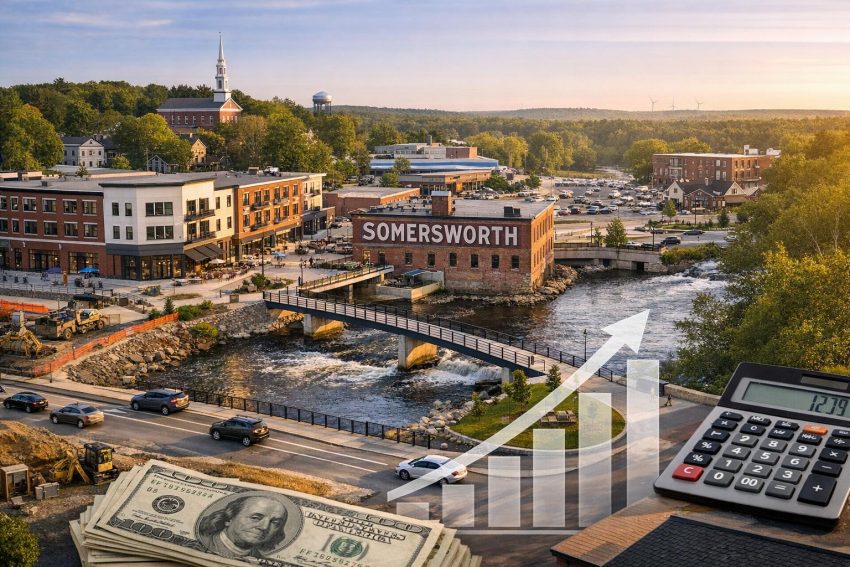
Somersworth, in Strafford County, New Hampshire, has the kind of economic backstory that still shows up in the built environment. Mills and riverfront commerce shaped the city for decades, and the proximity to Maine kept trade and commuting in the mix long after the heyday of textile manufacturing faded. In the last several years, redevelopment, infrastructure work, and community planning have become the main levers the city can pull to influence business growth.
For investors, business owners, and job-seekers, the practical question is simple: what kind of local changes actually matter to commercial performance? Downtown improvements, utility upgrades, housing supply, and prepared industrial sites don’t just change the look of a city. They change costs, labor availability, and how quickly a new business can operate without running into avoidable friction.
This article expands on how those forces play out in Somersworth, with a focus on the real mechanisms behind business growth—what gets built, what gets repaired, and what the city does to keep redevelopment moving.
Somersworth’s Economic Background: From Mills to a Broader Mix
Somersworth grew into what many New England towns recognize immediately: a river-powered industrial economy. The Salmon Falls River supported early manufacturing, and textile production helped define employment patterns, local services, and commercial activity. Like other mill towns, the city faced long-term pressure when global manufacturing shifted and the demand for certain production models declined.
When stable industrial employment shrinks, cities often face a familiar sequence: vacancies increase, property values can soften, and the customer base for small retail becomes less predictable. Somersworth did not avoid those pressures. Instead, the city’s path forward has leaned on diversification—healthcare, retail, education, professional services, and smaller manufacturing—so the economy doesn’t depend on a single sector to carry the whole load.
Regional gravity still matters
Somersworth’s location helps. It sits near larger hubs including Dover, Portsmouth, and Rochester, and it benefits from access to Interstate 95 and other regional corridors. That matters because many businesses don’t have to serve only the city where they sit; they serve a wider radius.
In practice, proximity affects:
- Labor markets (workers commute from surrounding towns)
- Customer markets (retail and services can draw from a larger regional population)
- Supply chains (transport time and reliability influence costs)
Still, the local challenge remains: modernizing without stripping away the character that makes older areas workable. Many redevelopment opportunities in Somersworth involve older buildings and infrastructure, which can be expensive to rehabilitate if planning and financing aren’t tight.
Downtown Revitalization: Why Storefronts and Streets Matter to Business
Downtown revitalization is one of the most visible parts of local development, but it’s not just aesthetic. Better streets and usable buildings affect whether businesses can open, stay open, and grow.
In Somersworth, redevelopment efforts often point toward:
- Rehabilitating older commercial buildings (including mill-era structures)
- Encouraging mixed-use patterns so residents live near businesses
- Improving walkability and pedestrian access in key corridors
Foot traffic isn’t magic, but it’s real
Business owners understand that customers don’t only come from marketing—they also come from being present in the neighborhood. When streetscapes improve (lighting, signage, sidewalks, and public seating), the area becomes more comfortable to visit. That increases the probability that a shop, café, service provider, or professional office can build consistent demand.
Municipal upgrades tend to work like this: when the city modernizes sidewalks, parking arrangements, and utility connections, private owners often see less uncertainty in renovations. A storefront that’s easier to access and equipped for modern needs looks more “open for business,” even to businesses that weren’t previously considering downtown.
Mixed-use zoning helps steady demand
Mixed-use developments create a built-in customer base because residential tenants sit above or near commercial spaces. That reduces the “daytime-only” problem many downtowns struggle with. When people live nearby, businesses can serve breakfast crowds and evening foot traffic instead of relying exclusively on commuters arriving and leaving.
For business growth, that stability matters. It supports staffing plans, inventory forecasting, and long-term lease decisions. It also makes downtown more resilient during slower weeks or seasonal gaps.
Infrastructure Modernization: The Boring Stuff That Pays Off
Strip away the marketing language and you get the same truth every operator learns: businesses start failing when basic systems fail. Infrastructure modernization reduces operational risk, lowers costs, and supports expansion.
Utilities, broadband, and service reliability
Reliable water systems and updated sewer lines matter for everything from food service to light manufacturing. When utilities can’t handle demand—or when repairs are frequent—business owners either delay growth or build extra costs into their budgets (equipment redundancy, higher maintenance, temporary logistics).
Broadband access is now part of that core foundation. Even traditional businesses depend on internet connectivity for payment processing, customer service, cloud-based operations, and remote work arrangements. For entrepreneurs and professional service firms, broadband can determine whether a startup can compete regionally at all.
When broadband improves, it also helps attract the kinds of businesses that work best with distributed staff and online client relationships—consulting, design, tech-enabled services, and remote-capable operations.
Road maintenance and logistics
Transportation improvements aren’t only about driving speeds. They help with predictable delivery schedules, vehicle maintenance costs, and access to commercial sites. When roads are resurfaced, signage is updated, and traffic flow is redesigned for clarity, local businesses benefit in a straightforward way: fewer delays and less day-to-day frustration.
This matters most for businesses that rely on regular inbound shipments or frequent customer travel.
Housing Development: Labor Supply Isn’t Abstract
Housing availability is one of those factors that seems indirect until you try to hire people. If workers can’t find housing within a reasonable commute, labor shortages become persistent instead of temporary.
For Somersworth, expanding housing options—apartments, townhouses, and rehabilitated units—can influence business growth by stabilizing the labor market. Employers generally expand when staffing becomes more predictable. Housing helps make that predictability real.
Affordable housing affects retention, not just recruitment
It’s easy to think housing only matters for getting candidates to apply. In practice, it also affects how long they stay. When housing costs outpace local wages, employee turnover increases and businesses spend more on recruiting and training.
That’s a problem for every sector that relies on steady scheduling: healthcare support, retail, hospitality, skilled trades, and child services. Housing initiatives don’t fix wage structures by themselves, but they reduce the “immediate exit” factor that shows up when workers can’t keep up with monthly costs.
Zoning and density choices
Somersworth’s ability to encourage diverse housing types often depends on zoning ordinances and whether the city can allow appropriate density in suitable areas. The aim is usually a balance: meet demand without pushing sprawl patterns that increase long-term infrastructure and transportation burdens.
Industrial Areas and Business Parks: Speed to Market Beats Hope
Industrial sites are not glamorous, but they shape investment decisions. Businesses—especially logistics, warehousing, and light industrial operators—often look for locations where they can start building quickly and connect to the necessary systems without surprises.
“Shovel-ready” sites reduce risk for investors
When local development projects prepare industrial land with pre-installed utilities, road access, and environmental clearances, they lower the friction for companies considering a move. That’s where business park planning earns its keep: investors hate delays because delays translate into borrowed money, construction interest costs, and payroll problems.
Companies comparing multiple locations often pick the place where the timeline is most predictable. In other words, they may not choose the site with the best marketing deck. They choose the site where they can open faster.
Somersworth’s cross-border advantage
Somersworth’s proximity to the Maine border adds another layer. Firms in logistics and specialty manufacturing may benefit from access to Route networks serving both regions. That can also expand the pool of suppliers and partners, which reduces downtime for contractors and service providers.
As these firms establish operations, they can support a chain reaction—maintenance services, transportation providers, and professional support like accounting and equipment servicing.
Land-use planning prevents long-term conflict
Industrial expansion works best when zoning is clear and compatible uses are defined. If an industrial area expands toward residential neighborhoods without careful planning, disputes about noise, traffic patterns, and environmental concerns become likely. Predictable rules help investors and residents understand what to expect—and that reduces the chance of stalled projects later.
Environmental Sustainability and Riverfront Development
Environmental considerations increasingly influence how redevelopment gets funded, approved, and built. But in practical terms, sustainability isn’t just about policy language. It can affect costs, grant eligibility, and long-term site maintenance.
Efficient buildings and stormwater management
Sustainable construction practices like energy-efficient systems and stormwater management upgrades can lower operating costs for both municipalities and businesses. For businesses, lower utility expenses can add up over time. For cities, better stormwater handling can reduce costly repairs after rain events.
Riverfront redevelopment adds another angle. When underused waterfront land is converted into mixed-use districts, recreational areas, or public space, it can increase property desirability while still respecting natural resources. The best plans don’t treat “nature” like an afterthought; they treat it as part of the property value equation.
Grants help cash flow and speed
Some sustainability-focused projects may qualify for state or federal grants. That can reduce the burden on local taxpayers and accelerate capital improvements that support a healthier business environment. Businesses often benefit when the city can fund infrastructure upgrades that would otherwise take longer to assemble through normal budgets.
Public-Private Partnerships: When Cooperation Actually Works
Large development projects rarely happen on municipal budgets alone. Public-private partnerships distribute risk and coordinate resources across roughly three groups: the city, private developers, and often financial institutions or nonprofit partners.
Financing tools that matter
Partnership structures can include tax increment financing (TIF-style mechanisms), cost-sharing for infrastructure, or infrastructure improvements tied to site development milestones. These arrangements can reduce the upfront burden on the city while aligning private investment with community planning goals.
For investors and business owners, the practical benefit of a well-structured partnership is simple: clearer timelines and fewer funding gaps that stall projects.
Governance and predictability
These partnerships don’t succeed by vibes. They succeed when:
- Permitting processes are consistent
- Oversight prevents mission creep
- Communication stays steady through the project lifecycle
If a project can’t get approvals on time or funding shifts midstream, the business environment suffers. Businesses don’t just need space; they need credible schedules.
Small Business and Entrepreneurship Support
Small businesses are often framed as “local charm,” but in economic terms they do something more concrete: they fill gaps when bigger employers can’t. A restaurant, a contractor, a repair shop, a takeout kitchen, a small accounting practice—these shape how neighborhoods actually function day to day.
Development that supports small business formation can come through shared spaces and flexible commercial layouts. Repurposed buildings—especially older storefronts and upper floors—can lower startup costs if the renovations are practical and the rent terms are workable.
Lowering the first-year cost helps survival rates
New ventures often fail early because of cash flow, not because the idea is terrible (ideas are messy; reality is messier). If small businesses can access affordable retail space, shared equipment, or starter-friendly leases, they can spend more time on operations and marketing and less time doing financial gymnastics.
Workforce training partnership reduces hiring friction
Business growth also depends on workforce readiness. Local partnerships with regional colleges and vocational programs can align training with job needs. When employees have relevant skills and certifications, businesses can onboard faster and reduce training costs.
For example, if a local employer needs technicians for HVAC, fabrication, or healthcare support roles, coordinated training programs can turn a slow hiring problem into a predictable pipeline.
Non-physical support matters, too
Façade improvement grants, technical assistance programs, and educational workshops can strengthen the odds that small businesses survive. Commercial buildings provide the stage; support programs help actors make it through the first season.
Regional Connectivity: Somersworth Isn’t a Bubble
Somersworth’s development outcomes are tied to southeastern New Hampshire and southern Maine. That matters because customer demand and buyer expectations often span multiple towns and counties.
Improved access expands effective market size
When roads function well and transportation access improves, customers travel farther without feeling punished. Retailers and service providers can then draw from a larger surrounding region.
It’s not a vague effect. A bench-marked change in accessibility can increase the likelihood that a consumer drives downtown rather than staying in their home town. That’s real incremental revenue, and it’s one reason redevelopment projects often focus on improving access routes and parking clarity.
Competitive positioning on cost and availability
Somersworth can also act as a cost-competitive alternative for certain businesses compared with larger nearby areas. If commercial rents and property prices are lower, companies may choose Somersworth while still serving regional clients.
That positioning only works when the city provides the basics: zoning clarity, reasonable permitting, and infrastructure readiness. Without those, lower costs don’t help much because operational friction can still cost money.
Tax Base Expansion and Fiscal Sustainability
When businesses occupy commercial spaces, municipal revenue often increases. Property tax growth can fund public services—education, emergency services, and ongoing infrastructure needs.
Development projects that convert vacant or underutilized parcels into productive commercial use can expand the tax base and reduce the pressure on local jurisdictions to rely solely on existing taxpayers.
Cost-benefit planning keeps growth from turning into a money pit
Fiscal sustainability isn’t a given. Infrastructure improvements require capital, and capital often comes with debt costs. The city’s challenge is to align the timing of revenue growth with the cost of infrastructure outlays.
When occupancy stabilizes and businesses remain engaged, long-term revenue streams can help justify earlier investments. When development stalls or spaces sit vacant, the fiscal math doesn’t work.
This is why financial planning and transparent budgeting tend to matter to businesses too. Clear expectations reduce uncertainty around tax policies and local service levels.
Demographic Trends: Planning for Who Actually Lives There
Population and household patterns drive demand for housing, retail, healthcare services, and education. If Somersworth’s population grows moderately, businesses can expect stronger baseline demand. If household sizes change, demand for different housing types also shifts.
Why household composition influences commercial demand
An aging population increases demand for healthcare and supportive services, but it can also affect retail mix and the need for accessible transportation. Smaller households may drive demand for smaller housing units and convenience-focused services.
Developers and business owners benefit when city planning accounts for these details. If zoning and infrastructure investment match projected demand, commercial spaces are less likely to sit empty because the local “customer profile” doesn’t fit the offered uses.
Master plans and capital programs reduce wasted investment
Somersworth’s long-term planning documents—master plans and capital improvement programs—help determine sequencing: what gets built first, which roads get upgraded, and how land use changes align with housing supply.
When planning is data-informed through labor market assessments and housing demand studies, it improves the odds that investments support real needs instead of speculative guesses.
Potential Challenges: What Can Slow Development (Even If Everyone Means Well)
Local development is rarely a straight line. Even strong redevelopment plans face real constraints.
Construction costs and project delays
Construction costs can rise faster than budgets. That can delay projects, reduce the scope of renovations, or push timelines out enough that businesses change their plans. For property owners, cost uncertainty can make them hesitate to invest in building improvements.
Approval complexity and permitting timelines
Regulatory processes at the state and federal level can add complexity, especially for projects requiring environmental review or significant permitting. If approval timelines stretch, investors carry costs longer, and that burden often shows up as higher rents—making business formation harder.
Economic cycles still hit small cities
During downturns, private sector appetite for expansion drops. Retail demand can soften, lenders get stricter, and businesses delay expansion plans. A city’s redevelopment momentum can slow if credit conditions change or consumer spending tightens.
Community engagement and local compatibility
Residents may worry about density, traffic, and environmental impacts. Those concerns aren’t automatically blockers, but they can slow projects if there’s no clear communication. Transparent consultation helps reduce misunderstandings and allows adjustments that preserve community support.
Workforce shortages in skilled trades
Even when the demand is there, projects can stall if there aren’t enough skilled trades workers for construction and renovation work. That kind of constraint can be regional, meaning Somersworth alone can’t solve it through local policy. Coordinated workforce efforts across the region are usually needed.
What Business Growth Looks Like in Practice
It’s easy to describe redevelopment in broad terms. The practical outcomes show up in business behavior—signs that local conditions have improved.
More leases, not just “new buildings”
Downtown improvements and infrastructure upgrades matter most when they translate into higher commercial occupancy rates. Empty storefronts don’t generate foot traffic; they create a feedback loop where remaining businesses struggle with weaker demand.
When occupancy increases, it’s usually because multiple factors align: better accessibility, workable space, and improved customer pull.
Earlier and faster openings for new ventures
Prepared industrial sites and clearer permitting reduce the time gap between “interested” and “operating.” For new businesses, speed matters because cash burn happens daily. When the path to opening gets shorter and more predictable, new ventures can take fewer risky financial leaps.
Stabler hiring and lower turnover
Housing availability and workforce training influence retention. When workers can find housing within a reasonable commute and receive relevant training, businesses can maintain consistent staffing. Consistent staffing improves service quality and operational reliability, which then supports repeat customers and steadier revenue.
How Somersworth Can Keep Momentum
Somersworth’s development picture is shaped by the interaction between city planning, private investment, and regional economic forces. The city can’t control every market swing, but it can improve the conditions that make investment more likely.
In practical terms, continued momentum tends to come from consistent implementation: keeping timelines realistic, maintaining infrastructure, upgrading utilities and broadband as needs evolve, and continuing to align housing supply with workforce demand.
Just as important is staying focused on redevelopment that creates measurable operating benefits for businesses. That means projects that improve access, reduce utility risk, and make renovated space usable for modern companies—not just “look nice on paper.”
Conclusion: Development Works When It Reduces Real Friction
Local development projects in Somersworth can drive business growth when they do more than change appearance. Downtown revitalization supports commercial demand. Infrastructure modernization reduces operational risk. Housing expansion stabilizes labor supply and retention. Industrial site preparation lowers investment barriers. Public-private partnerships can accelerate delivery when oversight stays clear.
The long-term impact will depend on sequencing, financing discipline, and whether redevelopment aligns with workforce realities and regional demand patterns. Business growth rarely comes from a single project. It comes from the cumulative effect of many planning decisions—some visible, some buried in utility upgrades and permitting processes—stacking up over time.
As Somersworth continues to implement development initiatives, the most meaningful indicators to watch are employment stability, commercial occupancy levels, property values where redevelopment occurs, and whether new businesses can open on schedule. When those metrics improve together, the city’s redevelopment effort stops being a concept and turns into a working economic engine.