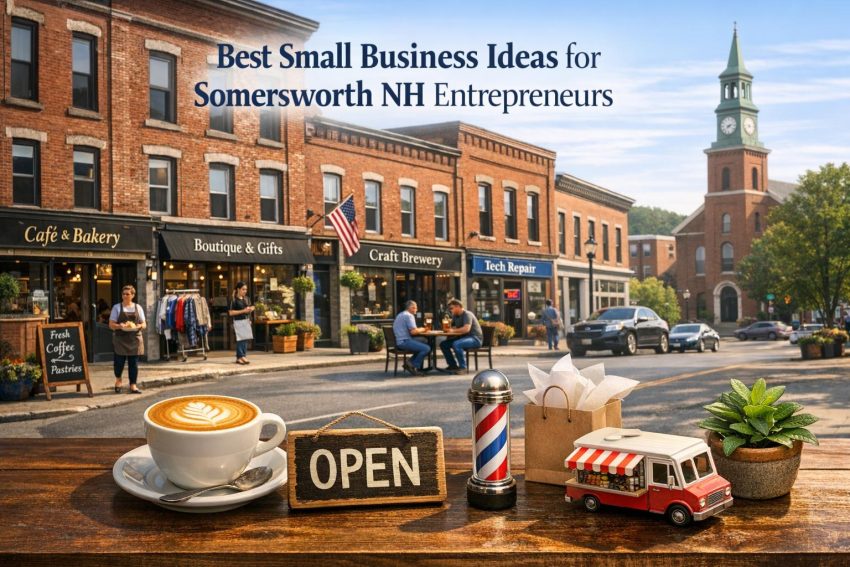
Somersworth, New Hampshire, is the kind of place where a business can actually get decent traction without having to fight a wall of mega-competition every day. The city sits near Dover, Rochester, and the Seacoast region, has a historic downtown, and holds enough working households to keep services running. Population hovers a little above 11,000, which means you should plan like a realist: your market probably won’t be big, but it can be loyal if you show up and deliver.
That combination—small-city overhead, nearby regional customers, and practical local demand—makes Somersworth a solid base for a range of small business ventures. Still, “solid base” doesn’t mean “press go and profits appear.” Before you spend money on inventory, signage, or a lease deposit, it helps to understand local demand, competition in neighboring towns, and the regulatory basics that apply in New Hampshire.
Retail and Specialty Shops in a Walkable Downtown
Downtown retail works best when you avoid being a “general store that sells everything.” In a small market, customers notice patterns. If the store has a repeatable reason to exist—something people come for—foot traffic becomes easier to predict.
Somersworth’s downtown has benefited from revitalization efforts and periodic commercial turnover, which creates openings for entrepreneurs who want to operate at a manageable scale. Think specialty rather than warehouse bargain bin. Specialty grocery, artisan baked goods, curated home décor, or a shop that focuses on locally made products can align better with how nearby residents shop. People may live in Somersworth, but they still shop across the region depending on price, convenience, and habits.
Specialty grocery: strong idea, but check the gaps
A specialty grocery store is a recognizable concept, but it lives or dies by specifics. To avoid sinking money into a “nice-to-have” shop, look for a narrow customer need. Examples that can work: organic produce with real sourcing transparency, a small but reliable selection of international foods, or a butcher/meat counter sourced locally. Customers pay for consistency more than variety.
Before you commit, do field research the old-fashioned way. Walk the existing stores. Check pricing, hours, product quality, and whether customers seem satisfied. Then observe patterns: what do people repeatedly ask for, and what shelves look thin or empty? If you can’t answer those questions quickly, you don’t have enough data yet.
Seasonal retail can smooth out the slow months
New Hampshire seasons are not subtle. Retail that ties into calendar demand—gardening supplies, seasonal décor, outdoor gear maintenance accessories—can reduce the “all-year” inventory burden. Instead of buying a full catalog of items you’ll be discounting in February, you build seasonal ordering plans that match demand cycles.
Seasonal retail also works well with limited space. If you have a storefront and you want to test demand, consider a model that changes with the weather rather than staying fixed. It’s easier to maintain freshness and it usually reduces waste.
Food and Beverage Establishments
Restaurants and cafés are not automatically “easy money.” They are mostly relationship businesses with rent, labor, and compliance layered on top. But they can do well in a city like Somersworth when the fit is good: clear positioning, reliable hours, and a menu that matches local habits.
Somersworth’s proximity to industrial zones and commuter routes can support breakfast and lunch concepts. People who work nearby don’t want a 45-minute drive just to get coffee and a sandwich. If your hours match their schedule, you become the routine stop.
Café vs. restaurant: pick your role
A modest café offering coffee, a limited prepared-meals menu, and comfortable seating can fit the “quick break” and “work session” crowd. Remote workers and students often want somewhere predictable—reliable Wi‑Fi, tolerable noise level, decent seating, and decent turnover for the tables during peak times.
A restaurant can succeed too, but you need to consider whether you’re competing on the same customer occasions. Dover has a more established dining scene, so you’ll do better with a narrower concept than trying to out-genre the region. Plant-based options, Mediterranean-focused menus, or specific regionally inspired American cooking can avoid direct duplication.
Food trucks: lower overhead, better feedback
Food trucks work as a practical entry point because you reduce upfront risk. You also get faster market feedback. If people don’t buy, you learn within weeks rather than months.
Community events, fairs, and cross-town foot traffic matter here. You’re not just selling food—you’re building a “where to find us” habit. If you develop repeat routes (same locations on predictable schedules), the business stops feeling random.
Licenses and health requirements are non-negotiable
Food businesses in New Hampshire require careful attention to health permits and food safety compliance. You should expect inspections, documentation requirements, and training obligations tied to food handling. The paperwork can feel like a speed bump, but it’s manageable when you set it up early and don’t try to wing it.
If you plan to move from truck to fixed location later, keep your compliance approach consistent so you don’t rewrite everything halfway through.
Home Services and Property Maintenance
If you want a business line that tends to keep working even when consumer spending slows, home repair and maintenance services are hard to beat. Homes in New England take constant hits: cold-season wear, moisture issues, roof and siding stress, and the occasional “why is this leaking now” surprise.
Somersworth has a mix of older homes and rental properties. That mix often means ongoing needs: repairs, weatherproofing, routine maintenance, and renovations. People may delay upgrades, but they rarely ignore leaks, unsafe wiring, or a failing heating system.
Trade services that stay busy
Plumbing, HVAC repair, roofing, siding, electrical work—these categories tend to have consistent demand. They also allow scheduling flexibility. For example, a roofing contractor may book seasonal projects while keeping smaller repairs ready for off-season.
Home services can start small. You don’t need a full fleet to begin. Many service providers begin with a reliable crew, proper tools, and a clear pricing approach for common jobs. Over time, you expand capacity after you’ve proven recurring demand and predictable conversion from leads.
Seasonal services in New Hampshire
Snow removal and storm preparedness aren’t optional here—they’re part of life. Snow plowing, driveway clearing, gutter cleaning before freeze-up, ice dam prevention, and storm debris cleanup can create a winter revenue plan. Spring and early summer can support landscaping, gutter follow-ups, and exterior maintenance.
When you plan by season, you can smooth cash flow. Without that planning, winter revenue might pay for summer marketing, and summer demand might pay for winter repairs. That’s survivable, but it’s not ideal.
Property management: steady work, higher standards
Property management services can fit Somersworth’s rental mix. Absentee landlords often want help with tenant communication, repairs, inspections, and leasing-related upkeep.
This segment demands credibility. Licensing (when required), insurance, a solid contract structure, and a clear reporting process matter. A rough contract or unclear expectations can create problems fast—even if the maintenance work itself is good.
Health, Wellness, and Personal Care
Demand for health and wellness services keeps rising across New England, partly because people pay for convenience and partly because “self-care” isn’t going anywhere. In a smaller city, residents may travel to Dover or other larger areas for specialized services. That travel pattern creates an opportunity for locally offered options.
Fitness studios: membership beats random drop-ins
Independent fitness studios—strength training, yoga, personal training—can work in smaller commercial spaces. Your success depends on building a membership base or consistent class attendance. If you’re running a studio where people try a class once and disappear, you’ll feel the margin pressure quickly.
To reduce churn, many trainers build programs that match specific audiences: older adults, beginners who want structure, youth athletics support, or people returning to exercise after a break. You don’t need to be “for everyone.” You need to be for someone who will stick around.
Personal care: repeat customers are the whole game
Hair salons, barber shops, nail studios, and massage therapy can do well when the service experience is solid and the business is consistent. These businesses often rely on repeat customers and word-of-mouth referrals.
Location still matters, but the quality of the service and the way the business manages scheduling matters more. People don’t want to hunt down appointments or deal with constant rescheduling.
Healthcare-adjacent services need licensing checks
Healthcare-adjacent offerings—home health support, senior companion care, mobility aid retail—may see growing demand due to an aging population trend. However, regulated healthcare categories require careful evaluation of New Hampshire licensing rules.
This is one of those areas where “it seems similar to another business” can get costly if the legal category differs. Before investing, confirm exactly what you plan to do and what credentialing is required.
Childcare and Education Services
Reliable childcare is a practical problem, not a theoretical one. In many communities, parents fight for availability, stable hours, and safe environments. A licensed childcare center or home-based daycare in Somersworth can meet a real need if you can handle the compliance workload and keep quality consistent.
Licensing and staffing rules matter more than marketing
Childcare businesses typically succeed because they become trusted by families. You don’t convince parents with a flyer alone. You earn trust through scheduling reliability, clear communication, safe routines, and compliance with state expectations.
Staffing ratios, training, facility standards, and ongoing oversight shape the business model. That’s why a “great teacher” isn’t always enough if the licensing structure doesn’t fit.
Tutoring and after-school programs
Tutoring centers and after-school enrichment can support demand, especially in subjects tied to regular school performance—math, science foundations, reading support, and test prep. These businesses can start with smaller classroom footprints, shared spaces, or hybrid in-person and remote options.
One advantage here is that education services often benefit from a clear specialty. If you focus on one age group or one type of support (for example, middle school math foundations), you become easier to recommend.
Niche instruction: music, coding, language
Specialized tutoring—music instruction, coding classes for children, language lessons—also can work. These businesses tend to grow through reputation and recurring enrollment rather than broad ads. You’ll need enough families enrolling each term, but you often get a steadier cycle when results show up in student progress.
Professional and Remote Business Services
Somersworth’s size doesn’t stop professional services from operating. If anything, it can help because overhead costs are typically lower than in larger city centers. The main condition is that you have the capability to deliver consistently and communicate clearly, because clients can easily shop around even if they are local.
Accounting, book-keeping, and marketing services
Professional service businesses like accountants, bookkeepers, marketing consultants, web designers, and IT support providers can work from home offices or small suites. Clients may be in Somersworth, nearby Dover and Rochester, or even farther away if you offer remote services.
In practice, a lot of these businesses win through trust signals: clear pricing, reliable turnaround times, a predictable process, and documentation that reduces client confusion. If you want fewer headaches, standardize deliverables.
Co-working: small hub, real demand signals
Co-working spaces can be tricky in a smaller market. You won’t fully replicate Portsmouth-style coworking culture. But you can still test demand with a small model: meeting room rentals, limited desks, and flexible access for remote workers or freelancers.
Before building out a space, it helps to validate whether people in the region actually want separation from home. Some remote workers prefer home. Others will pay for quiet, meeting access, and professional environment.
Legal and advisory practices
Legal and financial advisory practices can fit, but they require careful attention to licensing, malpractice insurance, and compliance obligations. Also, local competition matters. If similar firms already dominate the area, you may need a positioning angle—industry focus, specialty practice area, or specialized client segments.
Light Manufacturing and Artisan Production
Somersworth’s industrial history and available commercial spaces make small-scale manufacturing and artisan production plausible. Still, “plausible” doesn’t mean you skip compliance. Manufacturing has unique needs: zoning, waste disposal, ventilation, worker safety standards, and for some products, licensing tied to food or alcohol sales.
Tax context: plan for New Hampshire business taxes
New Hampshire is generally considered business-friendly compared to many places, but businesses still face state tax obligations. Operators should consider the Business Profits Tax and Business Enterprise Tax when planning. A tax professional can help structure your entity and estimate real costs. The goal here isn’t perfection. It’s avoiding surprises.
Maker businesses with retail sales can improve margins
Artisan producers sometimes work best with a hybrid model: on-site production plus direct retail sales. A small product line sold through local events and regional markets can build customer loyalty while providing a recognizable brand.
You can also extend reach through online sales and catalog marketplaces, but start with local traction first. Local sales help you understand demand and packaging preferences before scaling shipments.
Tourism and Short-Term Rental Services
Somersworth isn’t a headline tourist destination. But it sits close enough to the Seacoast and to southern Maine that it can function as a base for people who want lodging outside the busiest areas.
Instead of assuming a steady tourist flow, businesses in this zone usually work seasonally. You plan for peak months, moderate months, and slower periods. That means your operational costs need to match that rhythm, otherwise you’ll burn cash during the quiet stretch.
Short-term rental management
Short-term rental management is one way to participate without owning multiple properties yourself. Some operators manage listings for owners, handling cleaning coordination, guest communication, and maintenance scheduling.
Regulations for short-term rentals can change, and local ordinance details matter. You should confirm zoning restrictions, any city requirements, and tax obligations before launching. Even if management seems low-risk, compliance still affects how you operate day-to-day.
Guided outdoor recreation services
Outdoor services such as kayak rentals, cycling tours, or guided local hikes can work seasonally. The main business benefit is that you can align inventory and staffing with weather patterns.
Partnering with regional tourism services can improve visibility, but you still need consistent quality. People who book an excursion don’t want improvisation. They want clear meeting points, equipment that works, and a plan that matches the advertised experience.
Automotive and Transportation Services
People in Somersworth rely on vehicles, and vehicles need maintenance. That makes automotive repair and maintenance businesses a stable category. You’re selling reliability, safety, and convenience—three things that don’t go out of style.
Repair shops and detail services
Auto repair shops can be successful when they maintain consistent scheduling and clear pricing. Customers want to know what’s happening and why it costs what it costs.
Detailing services also can fit well at a smaller scale. Many detail operations succeed by targeting specific niches: seasonal detailing packages, fleet/detail partnerships, or recurring packages for vehicle refresh. It’s less equipment-heavy than some repair work, though you still need dependable tools and quality control.
Mobile mechanic services: lower footprint, sharper planning
Mobile mechanic services or “come-to-you” maintenance options can work by reducing customer friction. Your success depends on the types of jobs you take—some problems require a shop setting, while simpler maintenance can be done on-site.
Mobile services also require strong scheduling discipline. Arrive on time, communicate status clearly, and document work. If you treat it like a professional appointment system, customers tend to stick around.
Transportation and delivery: consider liability
Commercial transportation or delivery contracting can be feasible depending on access to regional routes and local demand. But this category comes with insurance and liability complexity. Also, some operations may require federal or state compliance if you cross into regulated transport work.
This is an area where it’s worth reading the fine print before you sign anything—or before you buy the van. The costs add up, and you don’t want your margin eaten by insurance or compliance mistakes.
Pet Services
Pet ownership tends to stay steady in New England, which supports pet grooming, boarding, and training services. In a small city, pet owners often value convenience and trust. They might have fewer grooming options than in a bigger metro area, so a good provider can develop recurring customers quickly.
Grooming and daycare: schedule reliability matters
A grooming salon or dog daycare center needs consistent operations. If schedules slip constantly or the facility experience feels chaotic, customers won’t take long to switch.
Also, cleanliness and safety standards are not optional. Pet services run on repeat visits, so you need strong sanitation routines, clear service terms, and staff readiness for common pet behavior challenges.
Mobile grooming: test demand without a big build-out
Mobile grooming can reduce initial facility costs and provide a convenient option for customers. It’s also a practical market test. You can validate which customer segments show up (busy families, seniors, people with multiple pets) and what price points they accept before expanding into a managed facility.
Factors to Consider Before Launching a Business
Somersworth offers more breathing room than larger regional hubs, but the population size limits your total market capacity. That means many businesses must depend on repeat customers, consistent quality, and practical regional spillover from nearby communities.
Competition from Dover and other nearby towns
Proximity to Dover can be a two-sided deal. It can bring customers into Somersworth, but it can also bring businesses out of Somersworth when people decide to drive for better selection, pricing, or service. Your job is to differentiate without pretending you’re the only option on earth.
Differentiation can be simple: better hours, more reliable scheduling, a narrower concept, a specific niche, or a product quality standard that competitors don’t consistently deliver.
Commercial real estate and zoning
Commercial lease rates in Somersworth are often lower than big-city centers, but location inside the city still matters. Foot traffic, parking access, visibility, and proximity to residential zones can influence sales. Even service businesses feel this impact.
Zoning matters too. Before signing a lease, confirm that your intended use matches zoning requirements. Retail, food services, home-based daycare, and light manufacturing often face specific conditions. Getting answers early prevents expensive delays.
Tax setup: don’t wing it
New Hampshire doesn’t impose a broad sales tax or personal income tax on wages, which can simplify certain bookkeeping pieces. But businesses still face state-specific tax obligations. If you’re forming an entity, Business Profits Tax and Business Enterprise Tax can matter depending on structure and income levels.
Even a “small business” can have multiple tax categories if you sell taxable products, hire employees, or handle regulated goods. Using a CPA during the formation period is usually cheaper than repairing mistakes later.
Build community credibility
In small cities, community engagement isn’t just feel-good stuff—it affects trust and repeat demand. Joining local business associations, participating in city events, and showing up consistently can strengthen your brand presence when advertising budgets are modest.
Word-of-mouth spreads faster when people already like you. The trick is staying professional: dependable hours, clear policies, and service quality that holds up under repeat use.
Conclusion
Somersworth, New Hampshire offers a practical setting for small business development when you align your idea with the city’s real demand and the regional flow of customers. Service categories—home maintenance, childcare, personal care, automotive repair, professional services—often show steady potential because needs don’t vanish when the economy gets a little wobbly.
Lower overhead costs compared with larger hubs can improve your chance of survival, and proximity to Dover and the Seacoast can broaden your market. Still, success depends on research, compliance, and a clear operational plan. If you start with solid assumptions, verify them with local observations, and manage costs like a grown-up, you can build a business that works in Somersworth’s scale rather than fighting against it.